If you follow a whole-food, plant-based diet—or you’re thinking about making the switch—you’ve probably heard that you need to pay particular attention to certain nutrients.
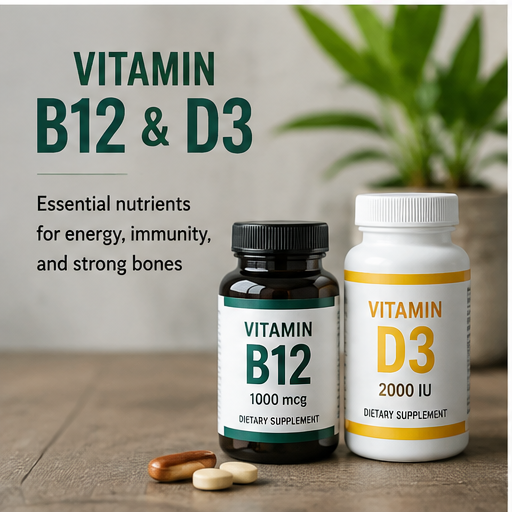
Two that come up again and again are vitamin B12 and vitamin D.
A well-planned plant-based diet can provide an abundance of fiber, vitamins, minerals, antioxidants and other beneficial compounds. But some nutrients deserve special attention because they are not reliably supplied by unfortified plant foods or because our bodies may not make enough of them under certain circumstances.
I wanted to look at what several well-known plant-based physicians and nutrition experts recommend, including Dr. Michael Greger, Dr. Neal Barnard, Dr. Joel Fuhrman and Dr. T. Colin Campbell.
One thing that becomes clear is that these experts don’t all recommend exactly the same supplement, form or dose.
That doesn’t necessarily mean one is “right” and another is “wrong.” It means that nutrition is more nuanced than simply choosing a bottle of vitamins from the store.
Why Is Vitamin B12 So Important?
Vitamin B12 is essential for the nervous system, red blood cell formation and DNA synthesis.
The challenge for people eating a fully plant-based diet is that reliable natural food sources of B12 are primarily animal-derived foods. Unfortified plant foods are not considered reliable sources of vitamin B12.
That’s why B12 supplementation or regular consumption of appropriately fortified foods is so important for people following a vegan or fully plant-based diet.
And this isn’t something to put off until you develop symptoms. A B12 deficiency can develop gradually, and neurological problems can occur.
Dr. Neal Barnard and the Physicians Committee for Responsible Medicine emphasize that people eating plant-based diets need to pay attention to vitamin B12.
What Does Dr. Michael Greger Recommend?
Dr. Michael Greger of NutritionFacts.org is very specific about vitamin B12.
His current recommendation is:
At least 2,000 mcg of cyanocobalamin once a week
or
At least 50 mcg of supplemental cyanocobalamin every day.
He also discusses getting B12 from fortified foods consumed several times throughout the day.
Why cyanocobalamin?
Dr. Greger specifically recommends cyanocobalamin, rather than methylcobalamin. In an interview, he described cyanocobalamin as an inexpensive and reliable source of B12.
For someone following a fully plant-based diet, his recommendation is particularly straightforward: make sure you have a regular, reliable source of B12.
Vitamin D
Dr. Greger also recommends paying attention to vitamin D, particularly for people who aren’t getting adequate sun exposure.
His recommendation for those who aren’t getting enough sun exposure has been 2,000 IU of vitamin D3 daily.
Interestingly, Dr. Greger has also discussed vitamin D2 versus D3, noting that at daily doses below 2,000 IU they appear to be similarly effective, while D3 may have an advantage with larger intermittent doses.
Bottom line from Dr. Greger:
B12 — cyanocobalamin
Vitamin D — D3 when supplementation is needed
What Does Dr. Neal Barnard Recommend?
Dr. Neal Barnard, president of the Physicians Committee for Responsible Medicine, also emphasizes the importance of vitamin B12 for people eating plant-based diets.
PCRM’s nutrition materials explain that high-dose oral B12 can be used when deficiency is present, while people at risk need reliable ongoing B12 intake.
Dr. Barnard has also specifically addressed the question of which type of B12 he recommends.
For the purposes of this article, the most important takeaway is that Dr. Barnard strongly emphasizes having a dependable B12 source rather than assuming a whole-food plant-based diet will automatically provide enough.
PCRM also notes that vitamin D may be worth considering, particularly for older adults and people who have limited sun exposure.
Bottom line from Dr. Barnard:
B12 — supplementation is important for plant-based eaters
Vitamin D — pay attention to adequate intake, particularly with limited sun exposure
What Does Dr. Joel Fuhrman Recommend?
Dr. Joel Fuhrman takes a somewhat different approach to vitamin B12.
His current supplements use methylcobalamin, a form of vitamin B12.
Dr. Fuhrman’s website explains that his products use methylcobalamin and that he recommends 75 mcg of B12 daily.
This is an interesting contrast with Dr. Greger, who specifically recommends cyanocobalamin.
What about vitamin D?
Dr. Fuhrman recommends vitamin D supplementation to help maintain adequate vitamin D levels. His current Daily +D3 products contain 2,000 IU of vegan vitamin D3, derived from lichen.
He recommends achieving an adequate blood 25(OH)D level rather than simply assuming that everyone needs exactly the same amount.
Bottom line from Dr. Fuhrman:
B12 — methylcobalamin
Vitamin D — vegan D3, with 2,000 IU in his current Daily +D3 formulas
What Does Dr. T. Colin Campbell Recommend?
Dr. T. Colin Campbell is one of the best-known researchers associated with whole-food, plant-based nutrition.
His work has focused extensively on nutrition and health, but his recommendations are not as specific as Dr. Greger’s or Dr. Fuhrman’s when it comes to choosing a particular form of B12.
For that reason, I don’t want to put words in his mouth by saying that he specifically recommends cyanocobalamin or methylcobalamin unless there is a clear current source from Dr. Campbell himself.
The more important takeaway for someone following a fully plant-based diet is that B12 needs to be addressed reliably, regardless of which form you ultimately choose.
Cyanocobalamin vs. Methylcobalamin: Which One Is Better?
This is probably one of the biggest questions people have after reading different recommendations.
Dr. Greger recommends cyanocobalamin.
Dr. Fuhrman uses methylcobalamin.
So which one should you take?
There is a lot of marketing surrounding the two forms, with methylcobalamin sometimes described as the “natural” or “better” form.
But I wouldn’t make that claim.
The important thing is to get an adequate and reliable source of vitamin B12.
If you’re following a whole-food, plant-based diet, the bigger mistake would be taking neither form because you assumed that all plant foods naturally contain enough B12.
What Brand Vitamin B12 should you use?
If you’re looking for an affordable B12 supplement, Amazon carries many different options.
For example, you may find both cyanocobalamin and methylcobalamin products, depending on the brand and formulation.
When shopping, look at the Supplement Facts label to see exactly which form of B12 the product contains.
If you want to follow Dr. Greger’s approach:
Look for a cyanocobalamin B12 supplement.
Click here to see my choice of cyanocobalamin Vitamin B12 on AmazonIf you want to follow Dr. Fuhrman’s approach:
Look for a methylcobalamin B12 supplement.
Click here to see my choice of methylcobalamin Vitamin B12 on AmazonThe goal of Plant-Based Digest isn’t to tell you that one brand is the only brand to buy. Rather, I want to help you understand what you’re buying and why.
Vitamin D: Do Plant-Based Eaters Need It?
Vitamin D is a little different from B12.
Our bodies can make vitamin D when our skin is exposed to sunlight, but how much vitamin D someone produces depends on many factors, including season, latitude, skin pigmentation, age, clothing, sunscreen use and time spent outdoors.
People who spend little time in the sun may therefore need to obtain vitamin D from foods or supplements.
Dr. Greger recommends 2,000 IU of vitamin D3 daily for people who aren’t getting adequate sun exposure.
Dr. Fuhrman also uses 2,000 IU of vegan vitamin D3 in his Daily +D3 products. His vitamin D3 is derived from lichen.
What makes vegan D3 different?
Some vitamin D3 supplements are traditionally made using lanolin, which comes from sheep’s wool.
If you’re following a vegan or strictly plant-based lifestyle, you may prefer vegan D3 made from lichen.
When shopping, check the product description and label rather than assuming that every vitamin D3 supplement is vegan.
Plant-Based Digest Recommendation
For readers who want a vegan vitamin D3 supplement, I would specifically look for a product that clearly identifies its vitamin D3 as vegan or lichen-derived.
Click here to see my choice of Vitamin D3 on AmazonWhat Should Someone on a Whole-Food, Plant-Based Diet Take?
There isn’t one supplement program that is perfect for everyone.
But B12 deserves special attention for anyone following a fully plant-based diet.
Vitamin D deserves attention as well, particularly if you’re not getting sufficient sun exposure or your blood level is low.
Here’s a simple way to think about it:
| Nutrient | Why Pay Attention? | Examples of Expert Recommendations |
|---|---|---|
| B12 | Unfortified plant foods aren’t reliable sources | Greger: cyanocobalamin; Fuhrman: methylcobalamin |
| Vitamin D | Sun exposure varies greatly | Greger: 2,000 IU D3 when sun exposure is inadequate; Fuhrman: 2,000 IU vegan D3 in current formulas |
The important thing is not to become overwhelmed by the different recommendations.
Instead, understand the basic principle:
A healthy plant-based diet should be built around whole plant foods—but some nutrients require special attention.
My Takeaway
One of the things I love about a whole-food, plant-based lifestyle is that the focus is on eating an abundance of real food:
🥦 Vegetables
🍎 Fruits
🫘 Beans and lentils
🌾 Whole grains
🥜 Nuts and seeds
🥔 Potatoes and other starchy vegetables
But “whole food” doesn’t mean we should ignore nutrients that may be difficult to obtain from plants alone.
Vitamin B12 is the big one.
And vitamin D is worth paying attention to, especially if you spend much of your time indoors or live in an area where sun exposure varies substantially throughout the year.
Dr. Greger, Dr. Barnard, Dr. Fuhrman and Dr. Campbell approach plant-based nutrition from somewhat different perspectives. That’s one reason I think it’s valuable to learn from several experts rather than relying on a single source.
The goal isn’t perfection.
It’s to eat more whole plant foods, understand your nutritional needs, and make informed choices that work for you.
A Note About Affiliate Links
Plant-Based Digest participates in the Amazon Associates Program, an affiliate advertising program designed to provide a means for sites to earn advertising fees by advertising and linking to Amazon.com.
If you purchase a product through one of our Amazon links, Plant-Based Digest may receive a small commission at no additional cost to you.
We only recommend products that we believe may be useful to our readers.
Medical Disclaimer: This article is for educational and informational purposes only. It is not intended to provide individualized medical advice, diagnose or treat any medical condition, or replace advice from your physician or another qualified healthcare professional. Talk with your healthcare professional about your individual nutritional needs, particularly before taking supplements or changing supplement doses.