
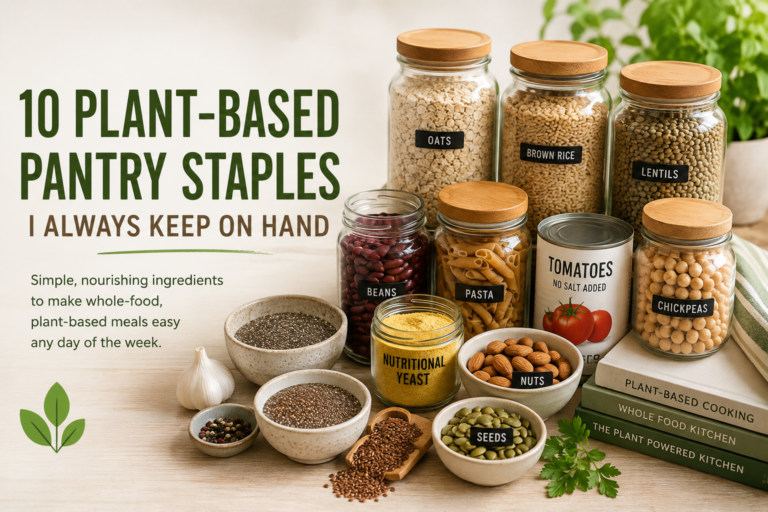
One of the easiest ways to make plant-based eating simple is to keep a well-stocked pantry.
When you have the right ingredients on hand, you don’t have to wonder what to make for dinner or rely on highly processed convenience foods. A few basic staples can become everything from a hearty soup or grain bowl to pasta, tacos, oatmeal or a quick snack.
Here are 10 pantry staples that can make whole-food, plant-based cooking easier.
1. Beans
Beans are one of the most versatile foods in a plant-based pantry. Black beans, chickpeas, kidney beans, cannellini beans and pinto beans can quickly add substance to salads, soups, chili, grain bowls and wraps.
I like keeping both dried beans and no-salt-added or low-sodium canned beans available. Canned beans are especially convenient when you need a meal quickly. If you’re watching sodium, drain and rinse them before using.
Easy idea: Combine black beans, brown rice, corn, salsa, lettuce and avocado for a simple burrito bowl.
2. Lentils
Lentils are another pantry favorite because they’re inexpensive, nutritious and incredibly easy to prepare.
Brown and green lentils are wonderful in soups, stews and veggie burgers, while red lentils cook quickly and practically melt into soups, curries and sauces.
Lentils are also a convenient source of plant protein, fiber, iron and other important nutrients.
3. Old-Fashioned Oats
Oatmeal isn’t just for breakfast.
Old-fashioned rolled oats can be used for overnight oats, homemade granola, oat flour and even savory dishes. They’re inexpensive, filling and easy to keep in the pantry.
For a simple breakfast, cook oats and top them with berries, banana, ground flaxseed and a sprinkle of cinnamon.
4. Brown Rice and Other Whole Grains
Whole grains make an excellent foundation for plant-based meals.
I like keeping brown rice on hand, along with grains such as quinoa, barley and farro. Cook a larger batch at the beginning of the week and you’ll have a ready-made base for several meals.
Add vegetables, beans and your favorite oil-free dressing or sauce, and dinner can be ready in minutes.
5. Whole-Grain Pasta
Pasta can absolutely be part of a healthy plant-based kitchen.
Look for whole-wheat or other whole-grain varieties. There are also pastas made from chickpeas, lentils and beans if you enjoy them.
Combine pasta with marinara sauce, mushrooms, spinach, broccoli or other vegetables for an easy weeknight meal.
6. Ground Flaxseed
Ground flaxseed is one of my favorite ingredients to add to foods without changing them very much.
Sprinkle it over oatmeal, blend it into smoothies or add it to baked goods.
Flaxseed can also work as an egg substitute in many recipes. Mix 1 tablespoon of ground flaxseed with about 3 tablespoons of water and let it sit for several minutes until it thickens. This “flax egg” can replace an egg in many baked recipes.
Because whole flaxseeds can pass through the digestive system without being fully broken down, ground flaxseed is generally the more useful form for obtaining its nutrients.
7. Nutritional Yeast
If you’re new to plant-based cooking, nutritional yeast may sound strange, but it can quickly become a pantry favorite.
It has a savory, slightly cheesy flavor and is delicious sprinkled over potatoes, pasta, vegetables and grain bowls. It’s also commonly used in plant-based cheese sauces.
Some nutritional yeast products are fortified with vitamin B12, while others are not, so always check the nutrition label rather than assuming it contains B12.
8. Nuts and Seeds
Walnuts, almonds, cashews, chia seeds, pumpkin seeds and sunflower seeds can add flavor and texture to plant-based meals.
Walnuts are wonderful on oatmeal and salads. Cashews are often blended into creamy plant-based sauces. Chia seeds work beautifully in oatmeal and chia pudding.
Nuts and seeds are calorie-dense, so a relatively small amount can go a long way.
9. Canned Tomatoes and Tomato Paste
These may be some of the hardest-working ingredients in my pantry.
Canned tomatoes can become pasta sauce, chili, vegetable soup, lentil stew and countless other dishes.
Tomato paste is particularly helpful for adding rich tomato flavor to soups and sauces. I usually look for no-salt-added or lower-sodium varieties when they’re available.
10. Herbs and Spices
Healthy plant-based food doesn’t have to be bland.
A good spice collection can completely transform simple ingredients such as beans, potatoes, vegetables and whole grains.
Some of my favorites include garlic powder, onion powder, smoked paprika, cumin, chili powder, turmeric, Italian seasoning, cinnamon, oregano and black pepper.
You don’t need to buy everything at once. Start with the seasonings you use most often and gradually build your collection.
A Few Bonus Staples
If you have room in your pantry, a few other ingredients are worth keeping around.
Low-sodium vegetable broth, tahini, natural peanut or almond butter, dates, balsamic vinegar, unsweetened plant milk and whole-grain bread or tortillas can make quick plant-based meals even easier.
Start Simple
You don’t need a pantry filled with specialty products to eat more plants.
Start with a few foods you already enjoy. Beans, oats, brown rice, pasta, canned tomatoes and some basic seasonings are enough to create dozens of different meals.
As you cook more plant-based recipes, you’ll naturally discover which ingredients you use most often and can build your pantry around them.
The goal isn’t perfection. It’s making healthy choices easier by having nourishing foods available when you need them.